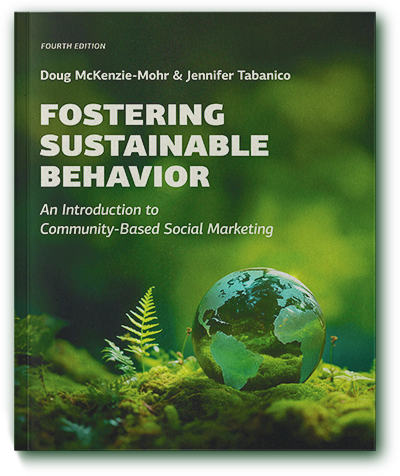
The following case study explores how the City of Burlington’s Ice Rink Energy Competition employed a low cost, easily replicable approach to significantly reduce energy consumpti…
In 2009, Opower, an energy information software company, partnered with a Minnesota utility company to provide residential customers of the utility company with customized home en…
Woodside Gets Active was a three-month-long campaign that aimed to increase physical activity amongst parents and their children in Woodside (UK), an area known for having high le…
Launched in 2002 by the Centers for Disease Control and Prevention, VERB was a ‘for-kids-by-kids’ multicultural campaign aimed at increasing and maintaining physical activity amon…
Vancouver’s Employee Trip Reduction Program was launched by the Greater Vancouver Regional District (GVRD) to reduce single-occupant vehicle commuter travel among its employees, p…
Developed in the Region of Peel, Ontario, Stepping It Up was a program designed to reduce car traffic and increase walking and cycling to school by working with elementary school …
Developed in two phases, the Smarter Travel initiative had an overall goal of decreasing the number of trips made by car in the Outer Boroughs of London, promoting walking, cyclin…
Hi guys,
I am curious if anyone else lives in a rural setting where the local/municipal level government has developed a program based around the villages/small towns in their go…
The North America Congress for Conservation Biology was held last week virtually, and they had a track on conservation marketing. One of the talks featured a program called “Fish …
I came across this article by Cass Sunstein (“Nudge”) about the role of personal identity surrounding the issue of mask-wearing (or lack thereof…). It references the iconic “Don’t…